
Orange County Owner-of-Record Fields
The Orange County parcel layer packs a lot into its owner-of-record card. AccountName identifies the assessment account. OwnerAddress fields carry the mailing information, while ParcelAddress fields point to the site itself. LatestSaleDate and the deed references let you connect the current tax roll to a recorded transfer. The deed references add the recording detail. The public GIS metadata exposes these aliases. The county's public CAMA page does not show every field label in plain text, so the aliases matter when you cross-check. Treat the card as an assessment record first, then confirm any transfer from the Clerk's file.
| AccountName | The account name in the county parcel layer. |
|---|---|
| OwnerAddress1/2 | The owner’s mailing address fields. |
| ParcelAddress1/2 | The situs address fields tied to the land. |
| LatestSaleDate | The latest-sale date attribute where populated. |
| Deed | A reference string that can guide the Clerk index search. |
| TaxMap/PIN/PRN | Parcel identifiers to match across public records. |
The roll names an owner of record, not an occupant. That owner may receive tax mail somewhere else entirely. An account can also sit with a business or an estate. So use the mailing line only for its record purpose. To establish the transfer itself, read the recorded deed. Then match its legal description to the parcel.
How Current Is an Orange County Owner Record?
Orange County uses the owner as of January 1 for the tax assessment year. A sale later in the year can leave the prior name on the assessment or bill while the mailing address shifts to “c/o” the new owner. This is a known timing rule, not proof that a deed failed to record. The source material does not give a fixed number of days for a CAMA refresh, so do not promise a specific update interval.
When a closing is recent, the latest recorded deed is the stronger signal of the filed transfer. Check the instrument’s grantee, date, legal description, and recording reference against the parcel key. The Treasurer may still use an account name set for the tax year, so ask the Treasurer about the bill and ask the Clerk about the recorded instrument.
Confirm the Current Orange County Owner
Start with the parcel card to identify the assessment account. Then follow its deed reference to the latest recorded instrument. The goal is to match the same property across both systems. Do not gather names from unrelated search hits. The deed may describe a larger tract or an older parcel. Compare the legal description and any plat reference before trusting the result as the right transfer.
- Search CAMA or GIS by situs address, owner, or parcel identifier.
- Copy AccountName, TaxMap/PIN/PRN, and the Deed or LatestSaleDate fields.
- Check the Circuit Court Clerk’s land records for the latest matching deed.
- Compare the grantee and legal description, then ask Assessment about any roll mismatch.
- Owner of record
- The party shown on the assessment account or filed instrument.
- Assessment roll
- The county’s annual record used to assess property.
- Situs address
- The address used to locate the property, distinct from owner mail.
- Recording lag
- The time between a filed transfer and a later roll display; Orange gives no fixed interval.
Entity Names on an Orange County Parcel
A current account may carry a company, trust, or estate name. The parcel layer's BusinessName field can add context. A GIS attribute will not disclose every private beneficiary. An LLC can appear as grantee. Virginia SCC CIS can show public entity details such as name, type, address, formation date, status, and filing history. That search helps interpret the name. The Circuit Court deed remains the land record. If an owner has died, the Circuit Court Clerk holds wills and related court records. The assessment page advises filing a will or affidavit of intestacy with the Clerk when a spouse dies. The name can then come off the bill. The public record may therefore depend on a probate filing as well as a deed. Ask the Clerk about the case or instrument. Do not assume a CAMA entry is the only record. The Virginia SCC businesses page points to entity and UCC access. Search the Clerk's Information System for public entity filing history and registered-agent details.
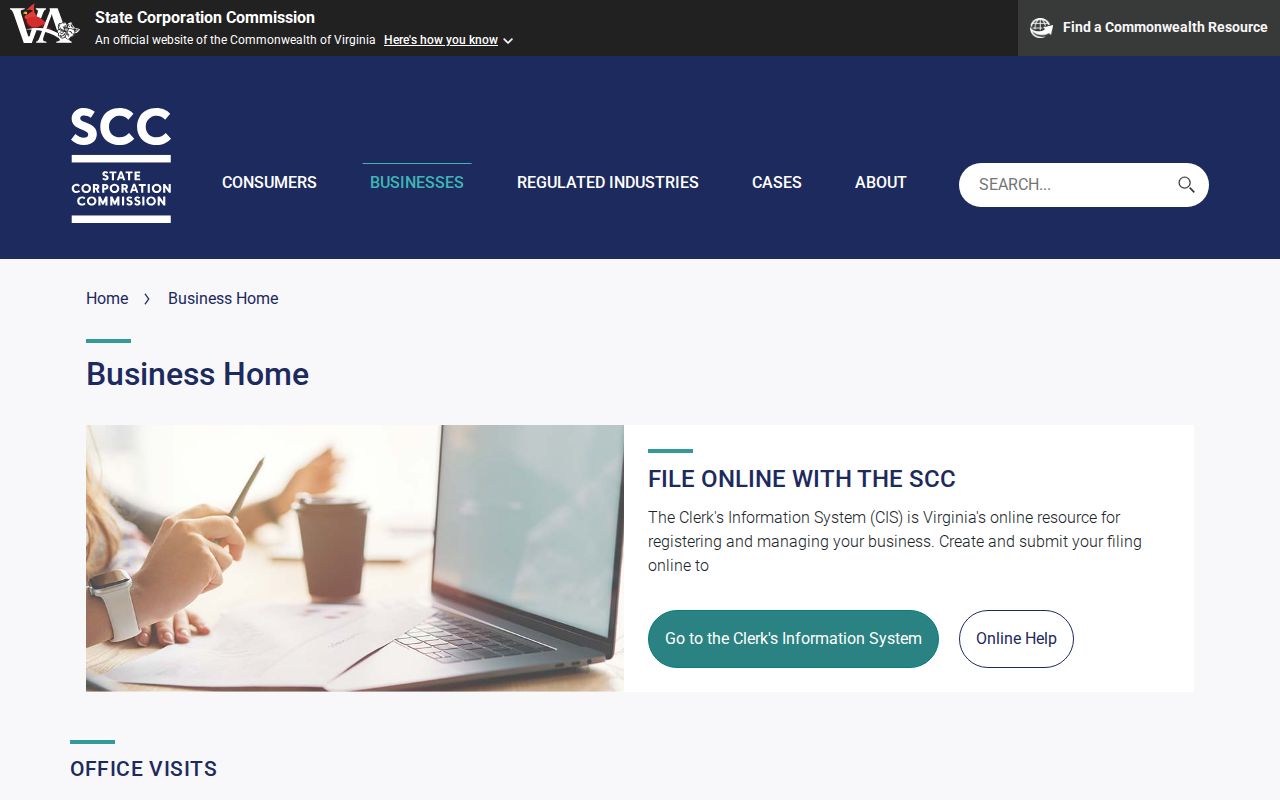
An entity search can round out what a company name means on a parcel, but it never substitutes for the deed that actually vests the land.
Orange County Mailing and Parcel Addresses
Orange County keeps owner mailing and parcel situs information in separate fields: OwnerAddress1/2 and ParcelAddress1/2. The mailing address is where tax notices go. It may be a post office box, a care-of line, or a different location altogether. ParcelAddress places the land in the GIS. A "c/o" line after a sale is useful evidence about delivery, but it does not by itself identify the deed grantee. Keep both addresses with the parcel number when you contact a custodian. If a rural address has changed, Development Services assists with 911 addressing in coordination with GIS. A street address helps locate the parcel. The deed's legal description and recorded plat confirm which land the instrument covers. The county's CAMA assessment search is the starting point for the owner account.
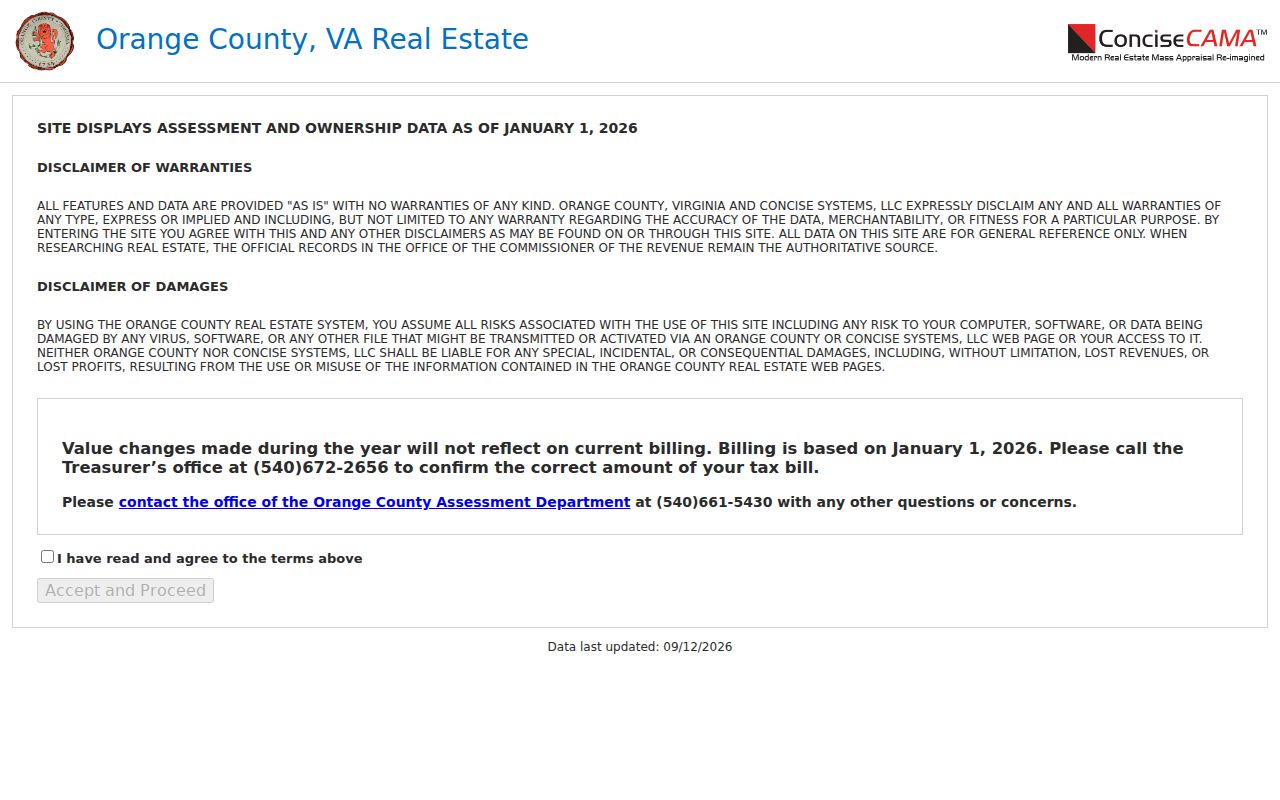
Start with the CAMA view to find the present owner. Then use the parcel reference to verify the latest deed with the Clerk.
Contact and Privacy Limits in Orange County
A public owner mailing line is a record address. It is not an invitation to intrude. Virginia's Address Confidentiality Program offers protected participants a substitute address, and ordinary property records may not display those residential details. Property questions belong in official channels, so use the Circuit Court, Assessment, or Treasurer contacts for any parcel matter. For a card question, Real Estate Assessment lists 540-672-6173; for the recorded deed, contact the Circuit Court Clerk.
Lawful use. Orange County owner records are for property research and legitimate civic or transaction needs. Do not use an address or name to track, threaten, or harass a person.
When to Call Orange County Assessment
Small errors in an account name, parcel address, or assessment card belong with Orange County Real Estate Assessment. Have the address handy. Also give the exact TaxMap/PIN/PRN so staff can tie the question to the right parcel record. The county lists 540-672-6173 for assessment questions. Bill amounts and payment plans go to the Treasurer. Deed images come from the Circuit Court Clerk.
A fresh transfer may explain an old account name. The roll uses an owner basis set each January 1, so ask whether it reflects the annual update before assuming an error. Note the notice year and the deed's recording details together, since that keeps the current-owner question specific and lets each office answer within its own records.
Orange County Latest-Sale Fields
Orange County parcel metadata carries two fields called LatestSaleDate and LatestSalePrice. They add useful context. They do not replace the recorded deed, and they cannot prove that no later transfer occurred. Compare the latest-sale date against the deed reference and the assessment year. Fields can disagree. When they do, read the filed deed and ask the custodian whether the parcel attribute reflects the current cycle.
Start an assessment account with the CAMA search. Start the deed itself with the Circuit Court Clerk's index and Record Room. The county publishes no fixed lag for roll updates after closing. So treat a sale field with care. Never call a record current on that field alone.
Same-day ownership questions need a dated search. Record the date you searched. Then compare the parcel card with the newest recorded deed the Clerk offers. Check that the deed's legal description matches the same tract, since one owner may hold several parcels or a divided property. A mailing name helps with correspondence only. It shows neither occupancy nor permission to make contact.
A split, consolidation, or boundary adjustment changes things. The latest sale field may then point to a document for a larger or differently described tract. Match every book, page, and instrument reference to the legal description, the acreage, and the current TaxMap/PIN/PRN. Orange County's plat review process covers boundary adjustments and consolidations. The final land record may still be needed to see how the current tax parcel relates to an older transfer.