
Orange County Deeds and Related Instruments
Deed records in Orange County live with the Circuit Court Clerk, not the assessor. The Clerk's land-record page lists deed books running from 1734 to the present. It also lists plats, wills, judgments, chancery and law order books, and miscellaneous orders. A deed is its own animal. It records an instrument filed with the court. The tax roll only later reflects the owner of record on an assessment account. When the question is who conveyed what to whom, read the recorded document. Read its legal description too.
| Deed Type | What It Does | Common Use |
|---|---|---|
| Deed of conveyance | Names parties, describes the land, and records a transfer instrument. | Confirming the filed transfer and its legal description. |
| Executor or trustee deed | May document a conveyance made through an estate or trust process. | Following a transfer that involves a fiduciary. |
| Deed of trust | Records a security interest associated with a loan. | Checking encumbrances alongside releases or satisfactions. |
| Easement instrument | Sets out a recorded use right affecting land. | Reviewing access, utility, or right-of-way terms. |
| Plat reference | Maps lots, boundaries, roads, or easements linked to a parcel. | Connecting a recorded map with a deed description. |
Each instrument does a different job. A conveyance deed shows who transferred an interest and who took it. A deed of trust or judgment lien can bind the land. Ownership does not even move in those cases. Plats supply lot and boundary context for the parcel. Orange County's Clerk also keeps wills and court orders. Those papers can explain an estate or chancery transfer. One caution applies. The label on an instrument does not tell you everything. Later releases, court orders, or another deed may have changed the record. For an address-to-record route, start with the Orange County property search. Then carry its parcel reference into the land-record index.
Orange County’s 1734 Land-Book Trail
Orange County formed from Spotsylvania in 1734. According to the Circuit Court Clerk, deed and will books begin that year. They run to the present. That describes the book run, not the earliest year a remote user can search online. The Clerk's land-record page states no exact COVERS/SRA index cutoff. Remote image coverage stays incomplete. For a chain reaching the older volumes, plan on a record-room or archival step. The historical record room also holds plats. It likewise keeps law and chancery orders, judgments, miscellaneous orders, and marriage records with indexes from 1912. The Library of Virginia microfilm catalog lists Orange County material, court indexes, and Gordonsville town minutes from 1919 through 1931. Old descriptions lean on adjoining owners and streams. They also cite roads and survey calls. Modern street addresses do not appear in them. A current parcel card is a bridge, not a replacement for the older deed description. See the Orange Circuit Court land-record page for the Clerk's stated holdings and access details.
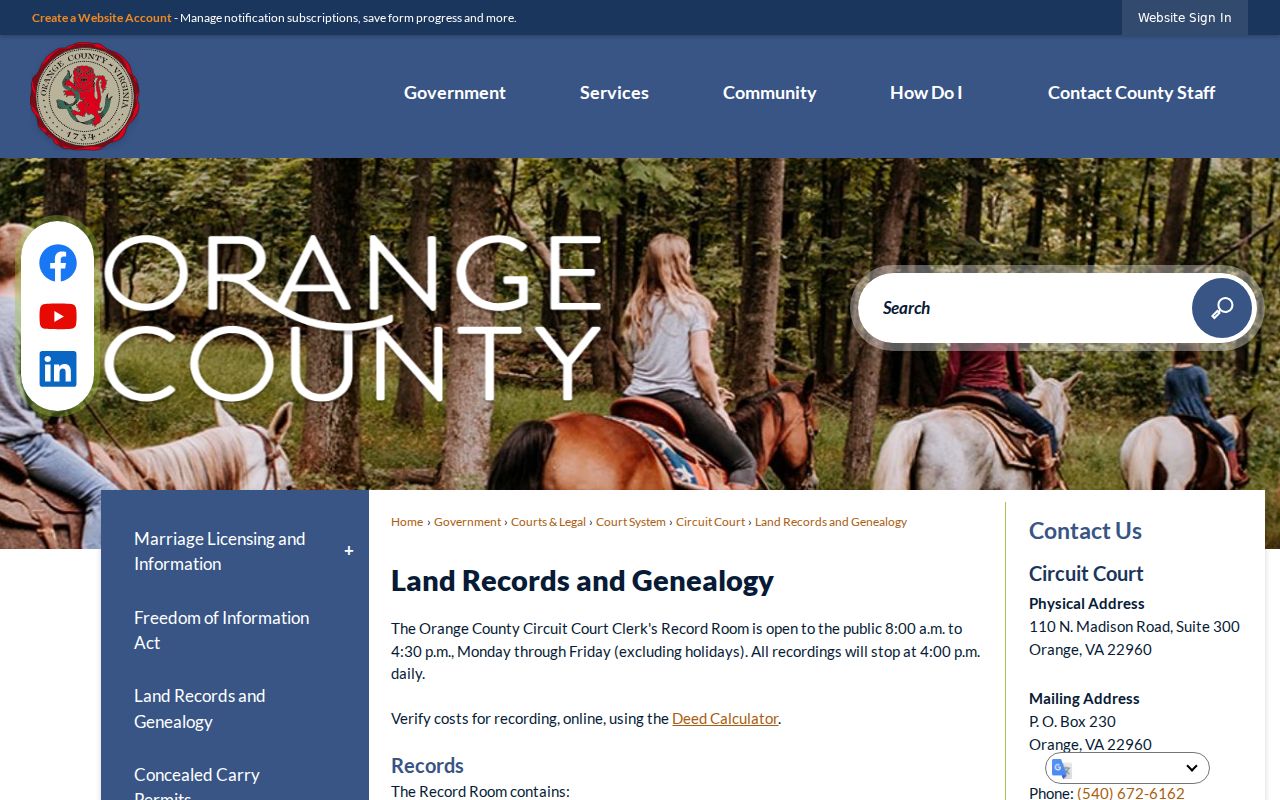
The Clerk's page is the practical bridge from an online citation to a record-room copy or a mailed request. Use it before assuming what can be pulled remotely.
Remote Index and Historic Image Access
Virginia COVERS and Secure Remote Access supply the remote land-record path. The statewide page explains that available courts and access depend on the system. Orange's official county page describes limited remote land-record access by subscription. The public county text lists neither every search field nor the first online year. So do not assume an old deed book opens from home. Its year may still appear in the Clerk's holdings. The free web route works best for current assessment and map context. Where Orange records are available, COVERS/SRA serves as the index path for land instruments. The Clerk's record room is the fallback for older or incomplete image runs. The Library of Virginia catalog helps identify microfilm series before any access or loan request. A strong archive request includes a book and page citation. Add the party name, approximate year, parcel key, and legal description. Use Virginia COVERS/SRA for the remote entry point. Read the access notice before relying on online image coverage.
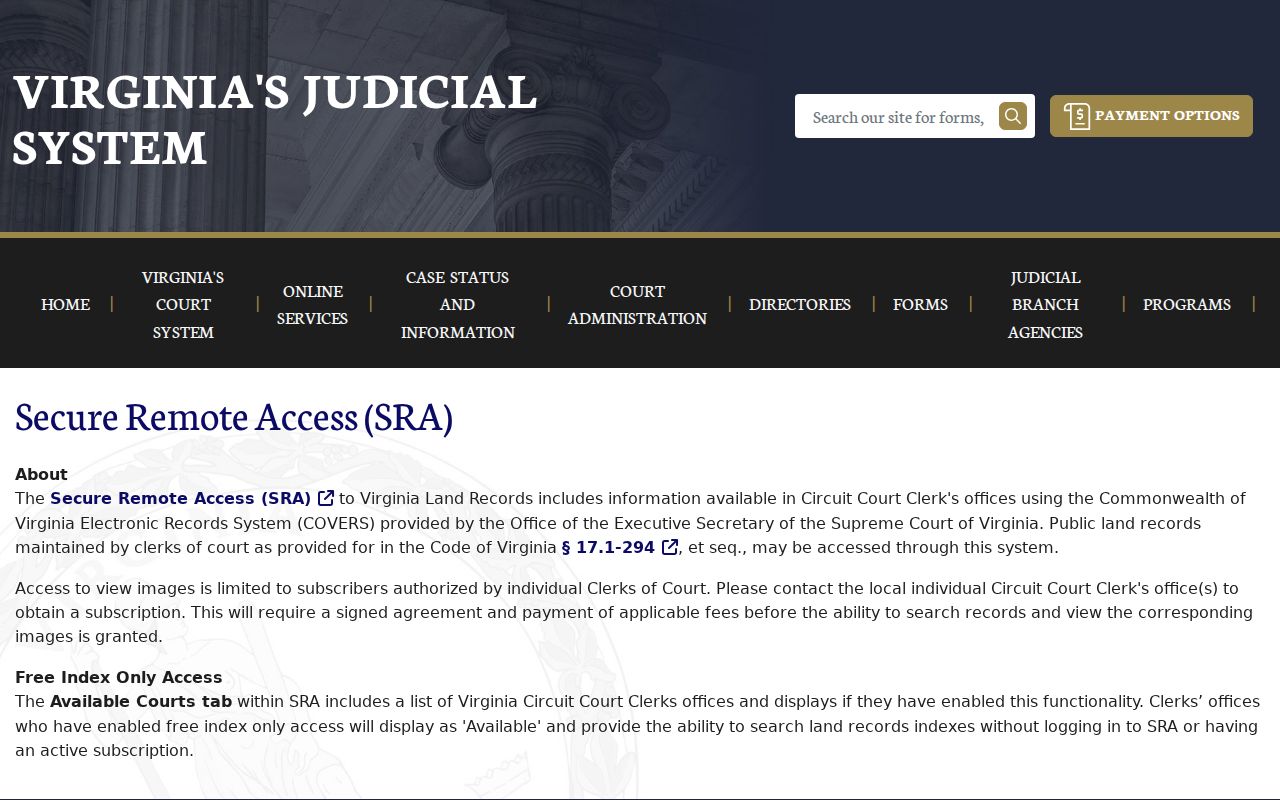
The SRA notice describes access conditions; it does not promise a remote image for every Orange County instrument.
Walk the Orange County Party Index
A grantor-grantee index organizes instruments by the parties involved. Start from a known deed or the latest parcel reference. Use the grantee entry to find the conveyance into the current owner of record. Then read the grantor on that deed and trace that party's earlier acquisition. Confirm the land description at every step. A name alone can point to a different tract. The county publishes no guide to the exact search-field order or online cutoff, so treat these steps as the chain method rather than a promised button sequence.
- Find the latest deed reference from the parcel record or a known party name.
- Read the grantor, grantee, date, book/page or instrument reference, and full legal description.
- Search the grantor as a grantee in an earlier period and compare the property description.
- Repeat until the desired period or available index run ends, then ask the Clerk about books or microfilm.
- Grantor
- The person or entity named as conveying an interest in an instrument.
- Grantee
- The person or entity named as receiving that interest.
- Chain of title
- The linked sequence of recorded transfers for one parcel.
- Book and page
- A volume and page citation in a deed book; retain the exact reference shown.
Orange County Plat and Court Cross-References
A deed trail in Orange County rarely stops at the conveyance books alone. The Clerk also keeps wills, judgments, and law and chancery orders. Probate records matter too. They may name an executor. They may include an order affecting land. They may also point toward a later deed. A recorded plat can be just as revealing. It shows a division, road, easement, or lot relationship that ties an old legal description to current GIS mapping.
Development Services handles subdivision plats, boundary-line adjustments, consolidations, easements, rights-of-way, and vacations. Its checklist asks for the tax parcel number. It also wants a deed-book and page or instrument reference. Once approved, the final plat lands in the Circuit Court land records. For a true boundary question, compare the recorded plat with the deed description. Leave the legal determination to a surveyor.
Sometimes the online deed index ends before the period you need. The Library of Virginia’s Orange microfilm catalog then serves as a practical finding aid for older county records.
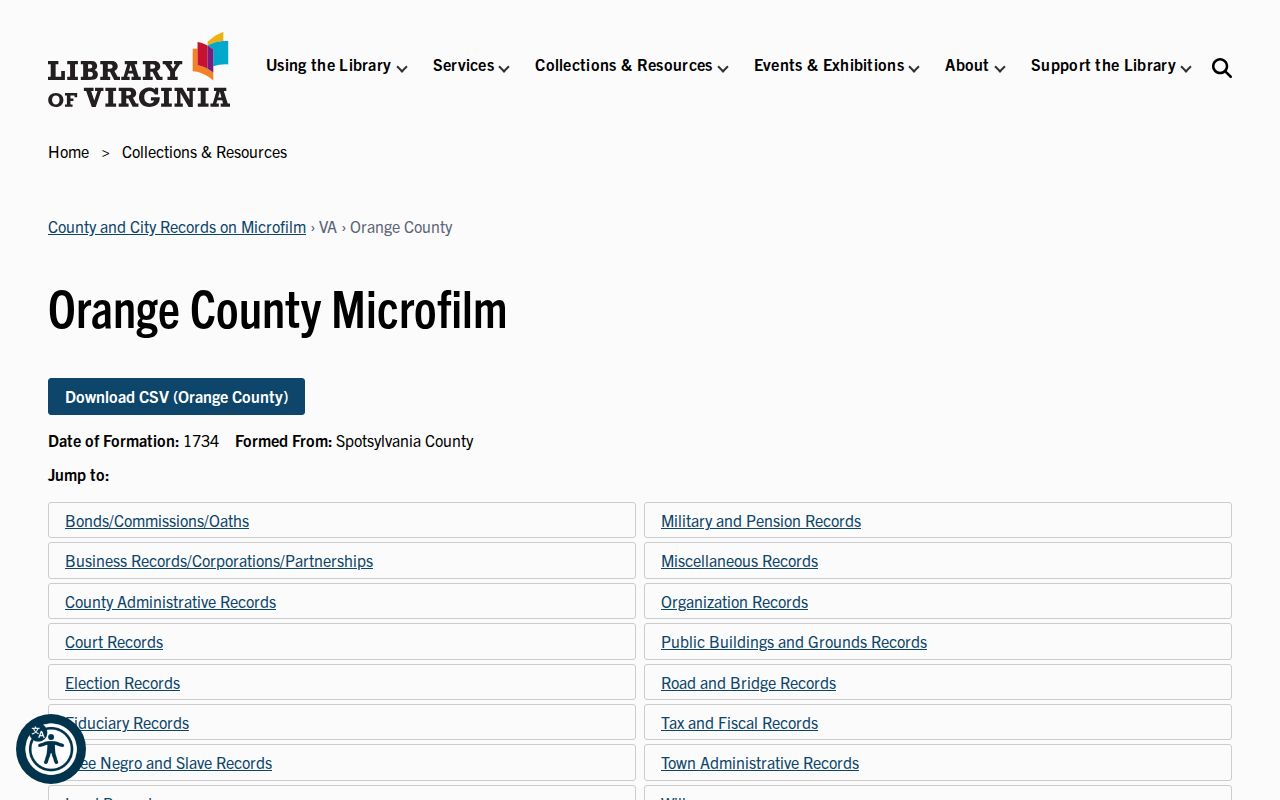
The catalog names the historical record groups on film. Note the series and reel details before contacting the archive or the Clerk.
Request an Orange County Deed Copy
The Orange Circuit Court Record Room keeps weekday hours. It is open Monday through Friday, 8:00 a.m. to 4:30 p.m. Recording stops at 4:00 p.m. Fees are simple. Ordinary copies run $0.50 per page. Certification adds $2, and a triple seal costs $2.50. The Clerk also sells remote access subscriptions. They are priced at $300 for six months or $600 for twelve months. Keep those routes separate. A subscription does not produce a certified court copy. A plain copy does not certify the record.
Mail requests work best when they are specific. List the parties, the approximate record date, and the book/page or instrument number. Add the parcel or legal description if you know it. Include payment and a self-addressed stamped envelope, and follow the current Clerk instructions. The office publishes no fixed processing time. If your citation is uncertain, call the Circuit Court Clerk before mailing rather than paying for a broad search with too little detail.
Send written requests to the Clerk at 110 N. Madison Road, Suite 300, Orange, VA 22960, with mail directed to P.O. Box 230. The office phone is 540-672-6162. Check the official land-record page for current instructions before sending anything.
Recorded, not guaranteed. An Orange County deed record documents an instrument in the Clerk’s files, but an index result alone is not a title opinion. Review the full chain and consult a title professional when a transaction depends on the result.
Orange County Liens and Court Filings
Liens travel through Orange County court records as often as deeds do. The Clerk’s land-record holdings include judgments, plats, and miscellaneous orders. Civil or chancery files may hold the claim, exhibits, a commissioner’s report, or the final order. A deed of trust, judgment lien, mechanic’s lien, easement, or restrictive covenant can burden a parcel. Ownership may not move an inch. Always look for a release or satisfaction before treating any encumbrance as current.
Local disputes, foreclosures, partitions, quiet-title actions, and tax cases run through the Orange Circuit Court record room. Others go to the statewide court systems, depending on case type. A docket entry may show the parties and dates. The underlying papers often take a Clerk request or a terminal visit. Sealed or exempt material stays closed even when a party name is searchable.
Federal title or bankruptcy litigation runs through PACER. The local land instruments stay with the Orange Clerk.
PACER handles federal dockets, so it can point to a relevant case in Orange County, but it is no substitute for county deed records.
Gordonsville’s Orange County Boundary Deed Clue
Gordonsville’s charter traces the town’s incorporation to an 1870 Act of Assembly. A boundary-relocation order dated June 20, 1991, reestablished the corporate limits. The survey and plat sit in Orange Circuit Court Law Order Book 463, pages 0201-0204. For land near the town edge, that citation links a modern parcel to a county law-order record. It can also point to a deed or plat.
Treat this as a clue. It cannot replace the parcel’s current legal description. A mailing address using Gordonsville may sit inside or outside the actual town limits. Compare the deed and boundary plat with county GIS. Then confirm jurisdiction with the town or county office.
The Virginia Gordonsville charter contains the cited incorporation and boundary record.
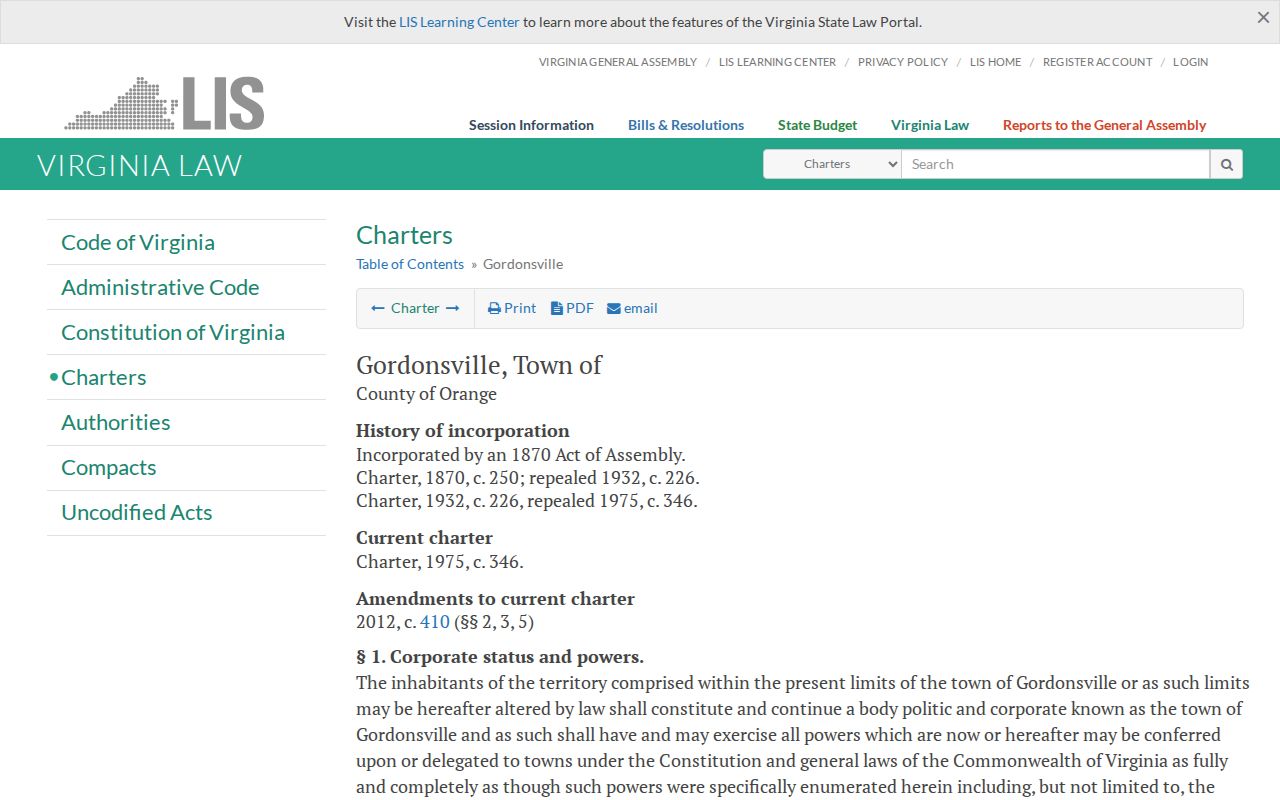
The charter pinpoints an exact Orange County order-book and survey reference.