
Former Owners in the Orange County Record Trail
Deed books at the Orange County Circuit Court Clerk run from 1734 to the present. That is the stated coverage. The online COVERS/SRA index does not publish a start year, and remote images are incomplete. The index sometimes runs dry. The Clerk's Record Room and the Library of Virginia microfilm catalog are the documented fallbacks. Keep the distinction in mind: book coverage is confirmed, while the online cutoff is not.
| Source | Years It Covers | Where Held | What It Shows |
|---|---|---|---|
| Deed and will books | 1734 to present, per Clerk | Orange Circuit Court Record Room | Recorded transfers and probate-related instruments. |
| COVERS/SRA | Online start year not stated | Virginia land-record access | Available index and images; coverage is not complete. |
| Microfilm catalog | Historic record groups; individual series vary | Library of Virginia | County indexes, court records, and Gordonsville minutes. |
| Plats and court orders | Historical and current files | Clerk and Development Services | Lot, road, easement, and boundary references. |
For a recent transfer, pull the parcel's deed reference or the latest recorded instrument. An older chain needs party names and legal descriptions. That bridges current GIS and the deed books. The Library's catalog can identify Orange County microfilm and old town material. It cannot replace a full title examination, though. The 1734 book run does not mean every earlier owner of record is indexed online. Let the parcel number and description anchor each step.
Orange County Deed Chains Move Backward
Every transfer hands you a name to search in the previous period. The grantee on one deed often reappears as a grantor on a later one. Common names invite false matches, so compare the land described, not just the parties. In older Orange County records, a tract may sit along a watercourse, a road, or named adjoining owners. It may also carry calls from a survey. A modern address rarely appears in that chain. Keep a working timeline, one row per instrument, with the source citation copied exactly. When a name, description, or date will not line up, stop. Resolve that break before reaching farther back. A later deed may convey only part of the earlier tract. An estate or court order can also shift an interest without any simple sale deed.
Use Orange County’s Index in Reverse
Begin with the newest record matching the parcel. Then walk backward from grantee to grantor. The book and page, or instrument number, is your locator for the source document. For every step in the Orange County property search, record the date, party names, document type, reference, and a short note on the legal description so the trail stays tied to the same land.
- Find the most recent deed using the parcel reference or known grantee.
- Read the grantor, grantee, legal description, and recording citation on the instrument.
- Search the grantor as a grantee in an earlier period and compare the land description.
- Repeat until the online index ends, then ask the Clerk or Library about older volumes.
- Grantor
- The party who conveyed an interest on a deed.
- Grantee
- The party who received the interest.
- Chain of title
- The ordered set of transfers that links successive owners to the parcel.
- Legal description
- The written land description; older calls can identify land when no street address existed.
Open the remote work at Virginia COVERS/SRA. When the online index or images do not reach the instrument, move to the Orange Clerk's Record Room.
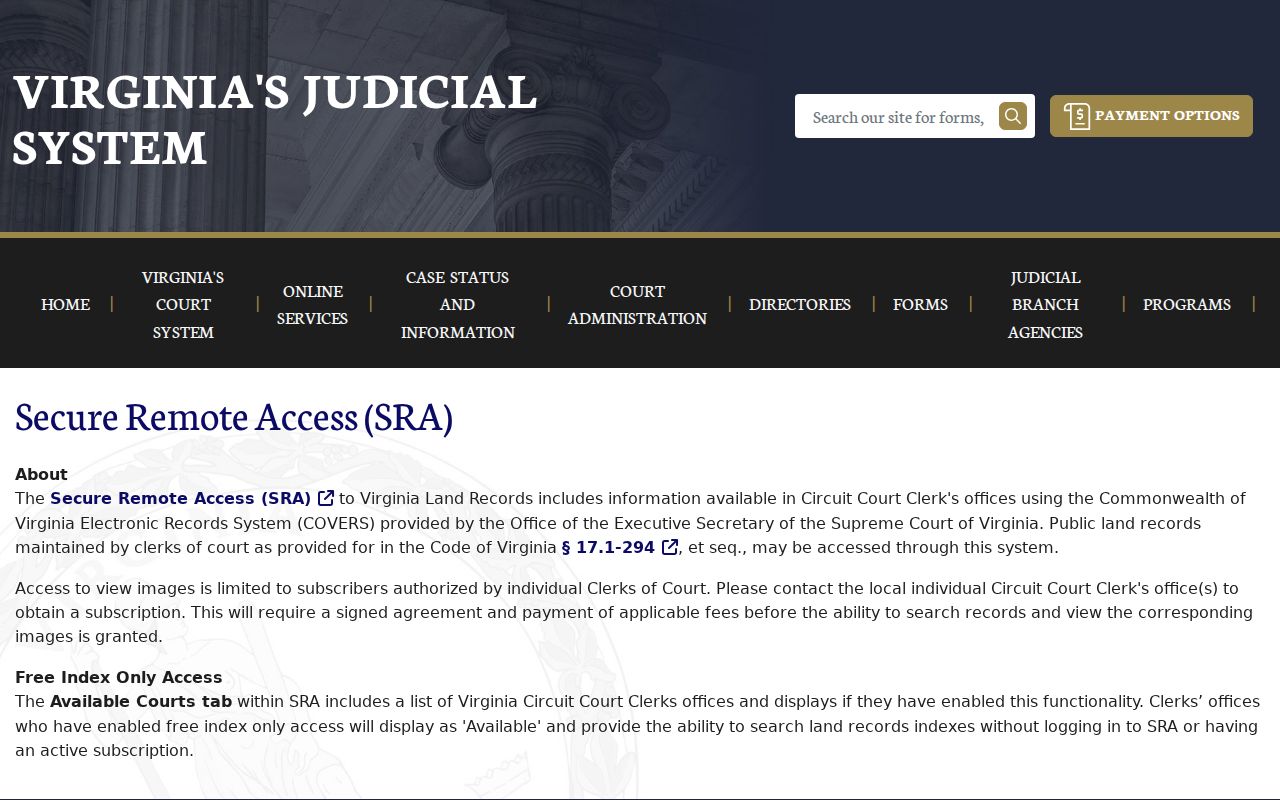
The SRA image is an access notice, so confirm Orange County coverage before tracing earlier names.
Orange County Microfilm and Old Books
The Library of Virginia catalog identifies Orange County records and local court indexes. It also lists Gordonsville town minutes from 1919 through 1931. Before requesting reels or older volumes, note the catalog series, reel, record group, names, and approximate period. The Orange Clerk's Record Room holds deed and will books from 1734 forward. It also keeps plats, judgments, law and chancery orders, and miscellaneous orders. Historical work usually needs both repositories. The Clerk can find a land instrument in county books. The Library catalog pinpoints preserved microfilm runs and municipal material. The county publishes no complete digitization cutoff. Ask which format holds the years you need. A remote subscription may help, but it does not put every image online. Consult the Library of Virginia Orange County catalog before planning the archival portion.
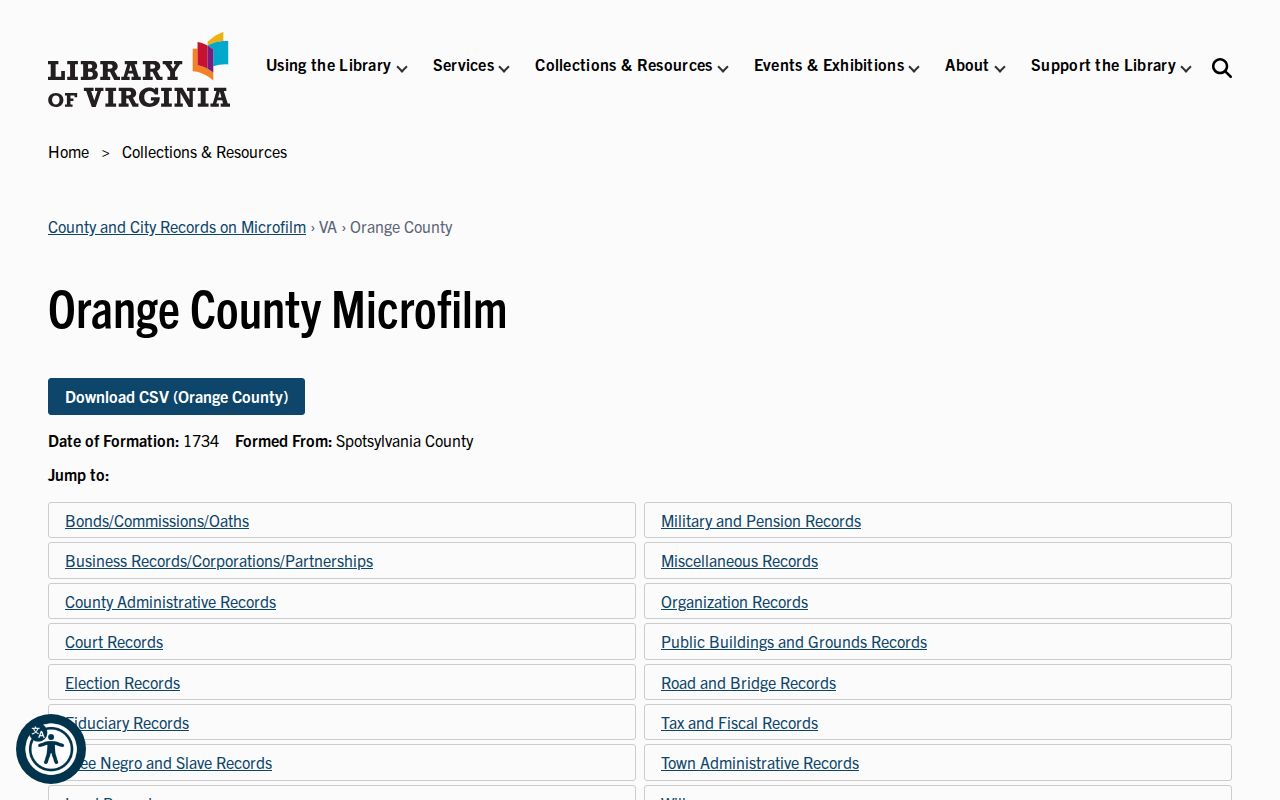
The finding aid helps you pick series and reels once the online chain runs out of detail.
Orange County Estates and Land Transfers
A death can move land through a will, an executor or administrator qualification, an inventory, an affidavit, a court order, a commissioner's deed, and a later conveyance. Orange's Record Room holds wills and indexes from 1734 forward. The assessment FAQ notes that a spouse's will or affidavit of intestacy should be filed with the Clerk. That filing drops a name from the tax bill. That account change is not the deed chain itself. Read the probate or land instrument that actually affected title. Search by decedent and fiduciary name as well as parcel description. When land passed under a will or order, the probate or chancery file often explains the missing deed. A death certificate can confirm date and identity. It cannot establish ownership. Vital-record access also carries its own public periods and eligibility rules. Virginia VDH makes birth records public after 100 years. Death, marriage, and divorce records become public after 25. Before those periods, eligible immediate family generally needs valid ID. A legal guardian needs proof of custody for a birth record. These certificates stand apart from the land record and prove nothing about title. Check Virginia Vital Records for current access rules before requesting a certificate.
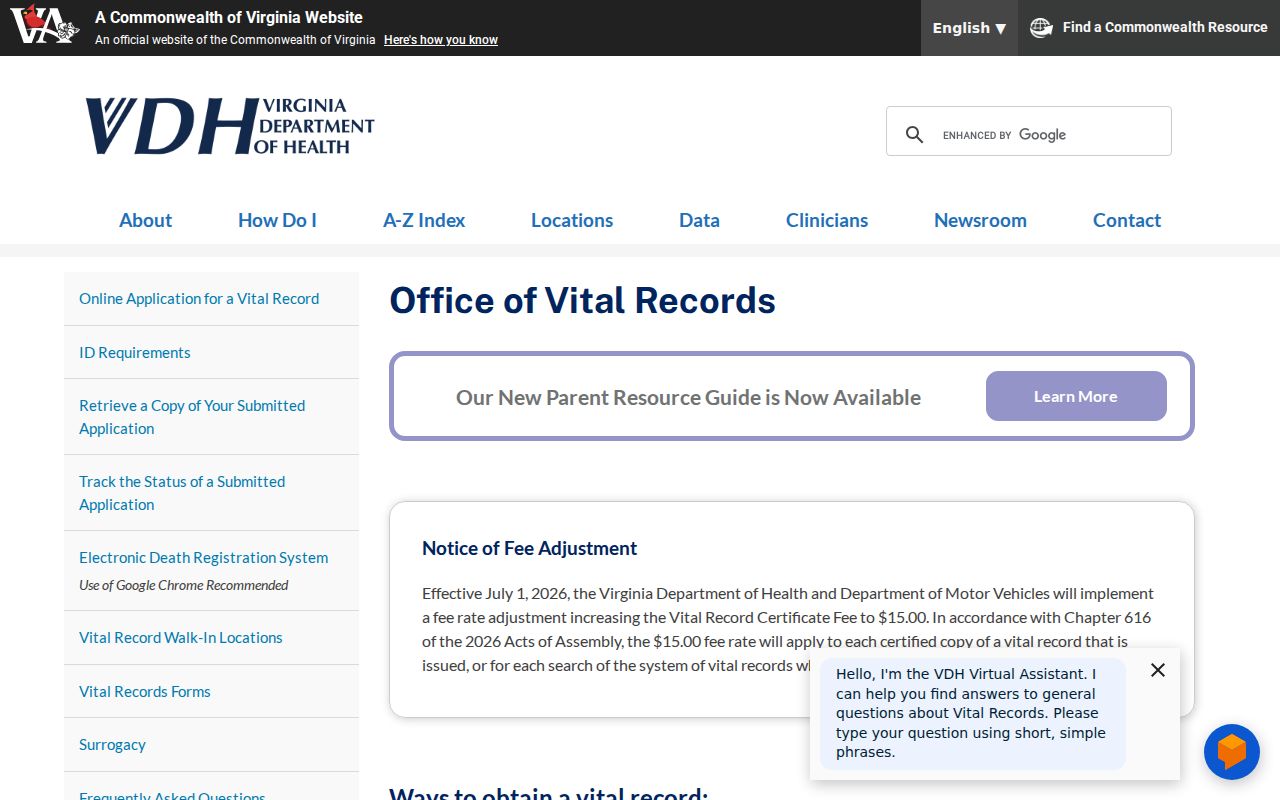
A vital record may settle identity or date in an estate inquiry. The deed or court order still controls the land transfer.
Walking the Orange County Deed Chain Backward
Begin with the parcel card or the most recent deed. Work backward through the index by party name. The current owner of record usually appears as the grantee on the latest transfer. Whoever signed as grantor becomes the prior owner to test against the earlier index period.
Check the legal description and parcel reference at each step. An owner in Orange County may convey several tracts at once. The owner may also convey only part of one. Deed books here reach back to 1734. The remote index does not state its earliest year. Remote image coverage also remains incomplete.
- Find the latest recorded purchase deed and note its grantee, grantor, date, book/page or instrument number, and legal description.
- Use the named grantor as the next grantee to locate an earlier conveyance for the same land.
- Compare the metes-and-bounds calls, lot number, acreage, adjoining owners, and plat reference before joining two deeds in a chain.
- If the remote index or image is unavailable, ask the Clerk about the Record Room, an in-person search, or a copy request; use the Library of Virginia catalog for relevant microfilm series.
- Grantor / grantee
- The party conveying an interest and the party receiving it, respectively.
- Chain of title
- The linked sequence of instruments used to trace recorded ownership interests over time.
- Legal description
- The written land description that ties a deed to a tract, even when its address or parcel number has changed.
How Far Back Orange County Ownership Records Reach
The Clerk dates Orange County's deed and will books to 1734, the year the county formed from Spotsylvania. That is the documented depth of the local series. The remote index names no first year. Remote image coverage remains incomplete as well. Older volumes may never reach the web. A long search may still call for a counter visit, a mailed copy request, or a microfilm lookup.
Coverage limit. Orange County deed books run from 1734 to present, but the online index start year is not published in the inspected material. Ask the Clerk which older volume or microfilm series covers the date you need.
Gordonsville’s Boundary Record in the Chain
Some former-owner work in Orange County doubles as boundary work. Gordonsville dates its incorporation to an 1870 Act of Assembly. A June 20, 1991 order later reestablished the town's corporate limits through a survey and plat recorded in Orange Circuit Court Law Order Book 463, pages 0201-0204.
The charter and the cited land record can explain a lot. A parcel's town status may have changed. A historic description may not match a current map polygon. For land near town limits, set the deed description beside the cited order, the plat, and today's GIS map. Keep county property records apart from municipal jurisdiction. What you gain is a fuller account of how the land moved through the county record, not a reason to assume the current boundary always applied.
Need a single instrument copy instead of a full chain? See Orange County deed records.
Match Orange County Old Deeds to Land
Street addresses are newcomers beside Orange County's deed books. Older instruments locate land differently. A deed may name a creek, a road, or an adjoining owner. Compass bearings and survey calls did the work an address does now. Match that wording against the Legal1 and Legal2 fields on the parcel card and any recorded plat. Names alone prove little. Two deeds with the same parties may still describe different tracts.
A split or consolidation can leave one present parcel straddling several older descriptions. Plat review helps. County plats document boundary adjustments, easements, dedications, and vacations. The Clerk's recorded map supplies the filed geometry. For title work, keep every link in the sequence. Ask a qualified title professional to review any gap.