
Orange County Property Value Types
An Orange County property value is really three numbers wearing one label. Assessed value is the county's figure for the tax roll. The latest sale price is a recorded transaction field pulled from deed records. Market value is the broader guess of what a property might fetch under current conditions. A private appraisal is narrower still. A licensed professional applies a valuation method for a specific purpose and date. The property records themselves never treat these as interchangeable.
| Value | What It Is | Where |
|---|---|---|
| Assessed value | County value used to calculate real estate tax. | Assessment record / CAMA. |
| Market value | A current estimate of likely sale value; not a parcel-layer field by that name in the reviewed text. | Appraisal or market analysis. |
| Latest sale price | Sale amount in the county’s latest-sale fields where populated. | GIS parcel layer; verify against deed. |
| Land and structures | Separate land, main-structure, other-structure, and total components. | Current and prior assessment fields. |
Orange County states its standard plainly: assessment at 100% of fair market value. Multiply the assessed value by the tax rate and you have the bill formula. Bill status and appeals belong elsewhere. LatestSaleDate and LatestSalePrice give a separate transaction reference in the parcel data. A recorded price reflects one moment and one set of terms. An assessment cycle, by contrast, values many parcels at once for a shared tax purpose. That difference matters whenever you compare the two.
Orange County’s Full-Value Assessment
Orange County assesses all real estate at 100% of fair market value. The county states this in its own materials. In 2024 it created a dedicated Real Estate Assessment Department. The department runs annual assessments with modern methods and technology. A 2024 taxation amendment then aligned assessment and tax administration with the fiscal year. That history explains why a county record carries an assessment year. It also explains why current and prior component values sit usefully side by side in the property records.
The value is still an assessment for public revenue administration. It is not an individualized appraisal for a sale, loan, or insurance decision. An owner who needs a valuation for a transaction should hire a qualified appraiser. Another appropriate professional can serve as well. For tax-bill details, exemptions, and review steps, see the separate Orange County property tax records page.
Read Orange County Land and Building Values
The GIS parcel metadata breaks assessed value into current land, main structures, and other structures. It also reports a total. Prior versions of those components come with it, along with an AssessmentYear field. This breakdown shows which part of a parcel's assessed total changed between recorded assessment periods. It does not reveal the assessor's full valuation model, comparable sales, or any per-feature method. Read nothing more into the field names than they disclose.
Check TotalAcres, StateClass, Zoning, District, Exempt, and Utilities alongside the value components. These fields add parcel context. They are not value adjustments on their own. A large tract, a different land class, or an exemption can explain this. Two nearby assessment totals may refuse to compare cleanly.
The county's Real Estate Assessment page describes the department's annual program. It also links to assessment information.
Find Orange County Sale-Price Fields
The county parcel layer includes LatestSaleDate and LatestSalePrice aliases. Treat them as a pointer to the latest sale data in the parcel service. They are not an automatic substitute for the recorded deed. The county publishes no guarantee that the public CAMA screen displays every sale field. Nor does it guarantee that every transaction carries a value in the layer. A deed provides the recorded instrument and its parties. The full terms may require a Clerk index or a copy through the deed records.
When sale price and assessment disagree, compare their dates first. The 2026 assessment notices go out in early May. A deed, by contrast, reflects one particular filed transfer. The assessment period and the transaction date can therefore describe different market moments. For a property with no clear recent sale, do not plug the gap with a neighbor's price. Nor should you use an unsupported appreciation rate.
Open Orange County CAMA for the assessment search. Then confirm a sale reference with land records.
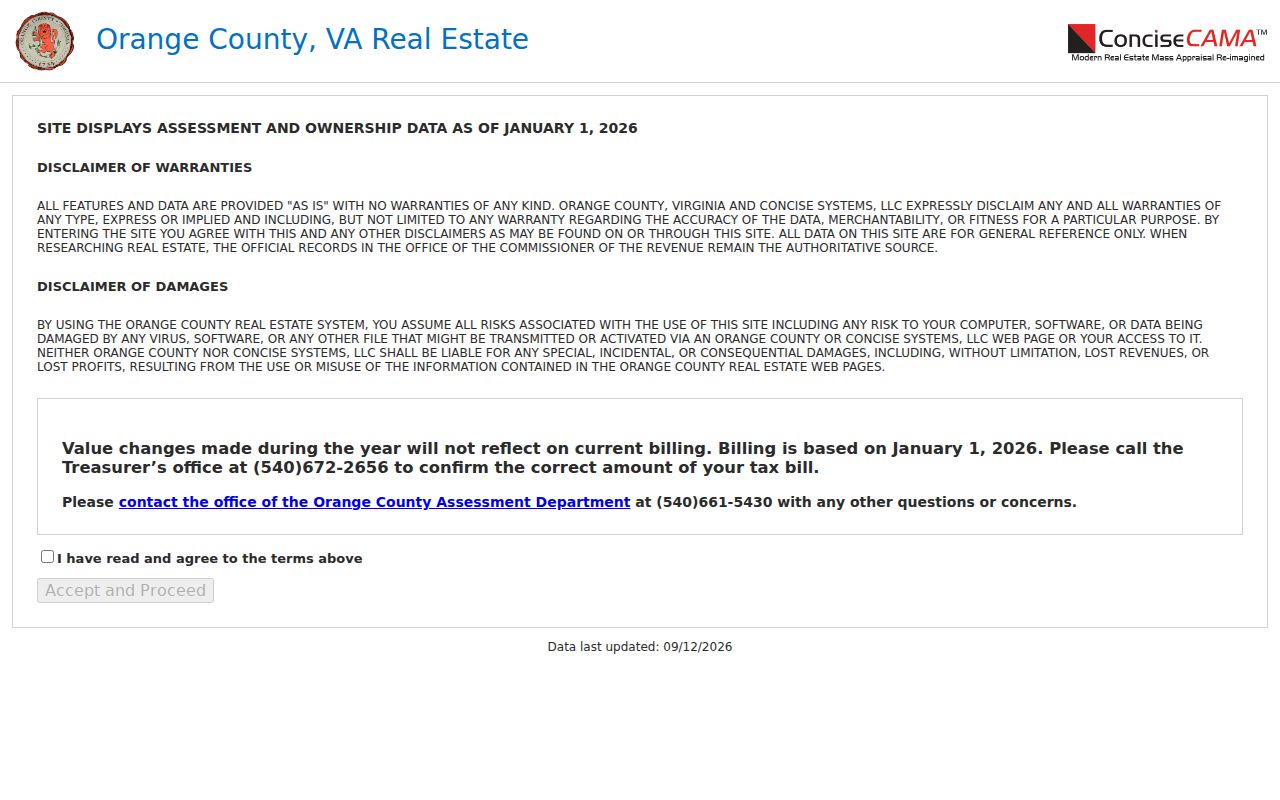
Start with the assessment roll to pull up the parcel, then confirm the transaction with the linked deed records.
Look Up an Orange County Assessed Value
Pull up the parcel's assessment card. Inspect the current total. Note the land and structure components too. Keep the assessment year and parcel number attached to the figures. If anything looks uncertain, match the situs address and legal description before comparing values. The public CAMA search provides assessment access. The county GIS layer supplies an exact technical field inventory for the same property records.
- Search the address or parcel identifier in CAMA or county GIS.
- Confirm AccountName, parcel address, TaxMap/PIN/PRN, and assessment year.
- Compare current and prior land, main-structure, other-structure, and total fields.
- Review LatestSaleDate and LatestSalePrice, then verify the transaction in the deed record.
- Assessed value
- The county’s value for the annual real estate assessment and tax calculation.
- Market value
- An estimate of likely sale value at a stated time.
- Appraised value
- A professional opinion for a defined purpose and effective date.
- Sale price
- The amount recorded for a transaction, subject to deed terms and verification.
Orange County Assessment Years and Notices
The county's reassessment page says 2026 notices are mailed in early May. They are not tax bills. Compare the notice's value and property facts with the current parcel card. Then use the listed assessment year to separate present from prior values. No countywide price trend or parcel-level annual percentage change appears in the property records. So skip broad claims about appreciation.
Assessment values can move even without a sale, because the county runs an annual program. A sale price can also stray from the assessment. It is tied to one transaction and one date. Keep those time frames visible whenever you compare an Orange County property with another parcel.
Orange County Value Fields and Exemptions
The Orange County parcel layer carries an Exempt field. The published metadata leaves out the full code list. The program rules behind each exemption code are left out as well. An exemption can shrink the taxable amount without touching the value fields the way a reader expects, so treat a blank or short code as a question rather than an answer. The county's assessment material explains each code. Do not lean on the code alone.
Classification fields such as StateClass, District, Zoning, and Utilities describe the parcel further. None of them adjusts market value on its own. Orange County property records compare best when acreage, class, the land and structure split, the assessment year, and the sale date all travel with each number, because a value pulled loose from that context can mislead.
Limits of an Orange County Property Value
An Orange County assessor value is a tax record, not a promise of sale price. The county's full-value standard is not an appraisal. No parcel card speaks for one buyer or lender. Sale fields can be old or missing. The latest deed transaction may not reflect current market terms, so read every value with its date, its components, and its source in the property records.
Value is not price. Orange County assessed value is for county assessment and taxation. It is not an appraisal or a guarantee of what a property will sell for.
Compare Orange County Values Carefully
Start any Orange County value comparison with the same kind of number on each parcel. Compare assessment to assessment for the same year. Compare sale prices with their dates and land descriptions. Save appraisals for defined valuation questions. A nearby parcel can differ in acreage, improvements, class, utility access, zoning, or recorded rights, which is why two close totals can hide very different properties.
Orange County property values work best as a family of related records rather than one definitive figure. The tax roll sets a standardized county value. The deed records document the transaction. A qualified appraiser answers a specific valuation question. For tax bills and review procedures, rely on the county notice and the Treasurer's channels.
Record field names and years beside each figure. The county layer shows current and prior land, main-structure, other-structure, and total amounts, so you can see which component moved. That detail reveals what actually changed. Check whether an exemption appears and whether the latest-sale fields match the parcel. For an appeal or a professional valuation, follow the county's current review instructions and the underlying property facts instead of a short list of nearby prices.