
What Orange County Property Tax Records Show
Two offices divide the work. Real Estate Assessment values each parcel and its structures. The Treasurer handles the bill and payment record. Orange County sets assessed value at 100% of fair market value under its stated standard, and the tax rate is applied to that figure. For value detail, the CAMA/GIS parcel layer lists current and prior land, main-structure, other-structure, and total values. For the amount due, the Treasurer portal is the source.
| Field | What It Shows | Where |
|---|---|---|
| Assessed value | Current land, main structure, other structures, and total. | Real Estate Assessment / CAMA |
| Prior value | Prior component values and assessment year. | GIS parcel attributes |
| Exemption and land use | Exempt field and related account context. | Assessment record |
| Tax bill and status | Current charges, payment, and delinquent amount. | Treasurer |
| Rate calculation | Assessed value multiplied by the tax rate. | County tax information |
The county says real estate is assessed at full fair market value. That figure is not an appraisal. It is not the last sale price either. The GIS layer stores LatestSaleDate and LatestSalePrice separately. The Treasurer's bill answers a third question, since it reflects the rate and account charges for its own tax period. One parcel record can hold a value, a sale reference, and a bill amount that answer three different questions.
Orange County’s Annual Assessment Cycle
Orange County stood up a dedicated Real Estate Assessment Department in 2024 and runs an annual assessment program built on modern methods and technology. The county pegs value at 100% of fair market value. The 2026 notices are mailed in early May. A notice is not a tax bill. The Board's October 8, 2024 taxation amendment aligned assessment and tax administration with the fiscal year.
Read a notice as a value record first. Compare its land and structure components with prior values in the parcel layer, then review property facts that may explain a change. Multiply the assessed figure by the adopted tax rate to estimate the tax. The estimate is still not the final bill. The Treasurer issues a separate billing account and payment schedule.
The county reassessment and tax page explains the 2026 notice cycle and value formula, while review routes and appeal forms sit on the Real Estate Assessment page. Value questions start there.
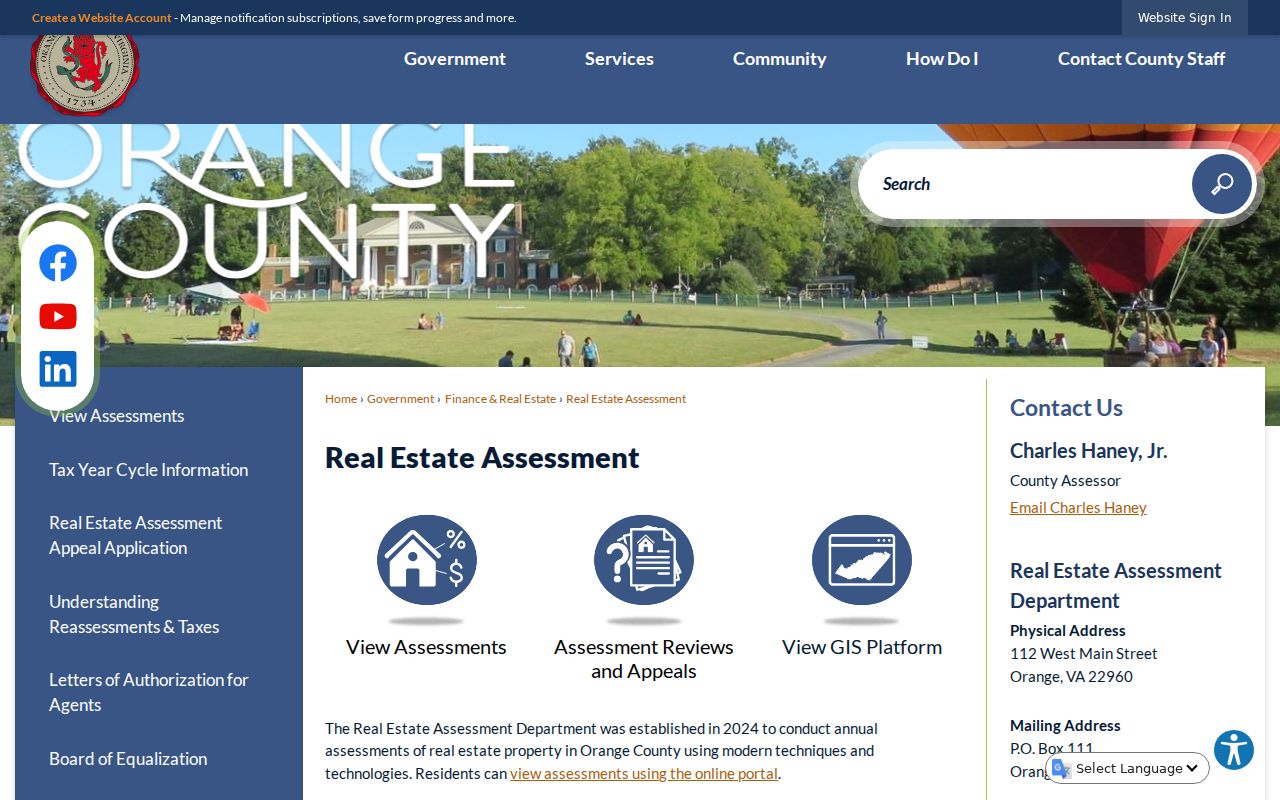
Value questions begin on the assessment page. The notice itself confirms the current review steps and dates.
Orange County Tax Bill Dates and Payment
Orange County bills real estate taxes twice a year. Due dates are June 5 and December 5. A 10% penalty lands on June 6 or December 6, and 10% annual interest starts July 1 or January 1. The Treasurer's payment-options page links the Tyler self-service account and lists phone IVR service. The IVR lookup uses tax year and bill number. Prepayment uses the parcel or map ID.
Online payments carry service charges. The county lists a 3.75% card fee with a $2.50 minimum and a $0.95 e-check fee. Confirm the amount and fee shown before submitting. The automated phone system answers at 540-661-5307. For account questions or a payment agreement, contact the Treasurer rather than the assessment portal.
Start at Orange County Treasurer payment options for current payment channels and fees.
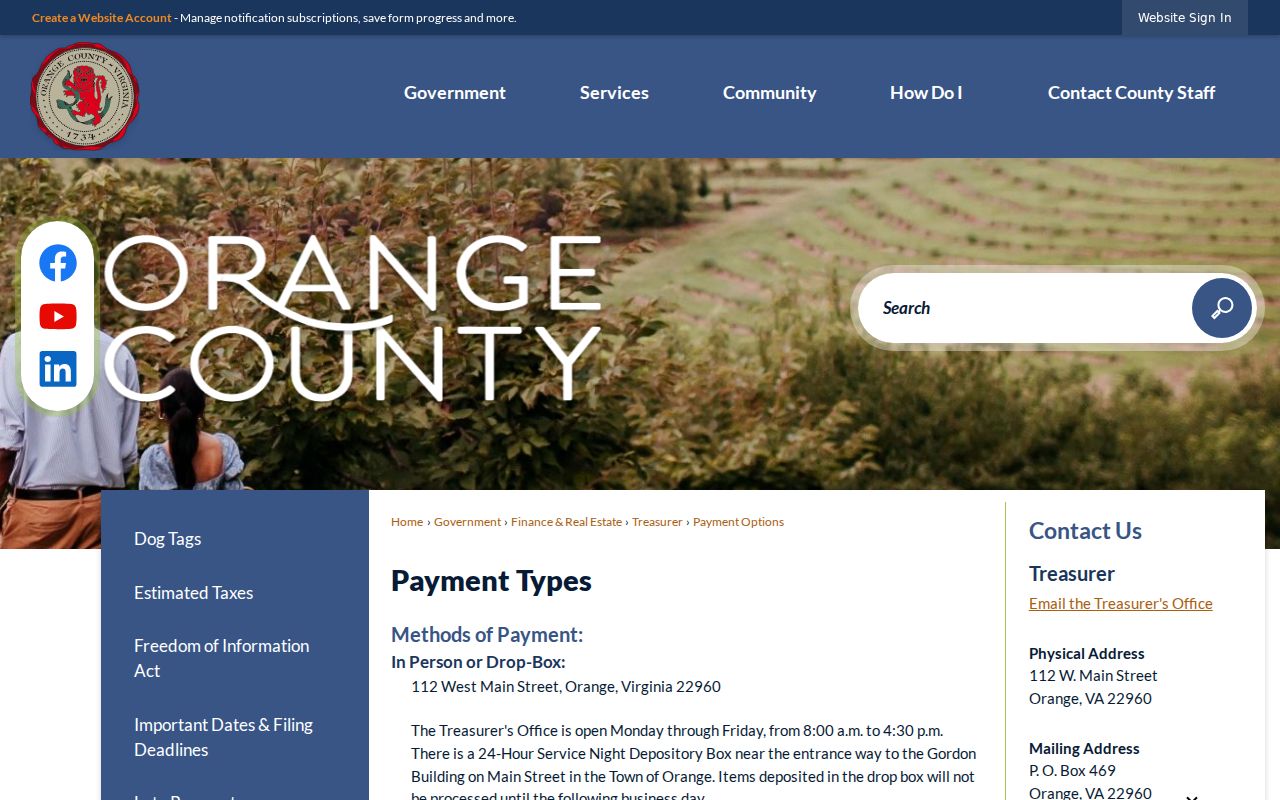
The payment page splits bill lookup from assessment and lists the county's current payment routes. Check it before you pay.
Find an Orange County Tax Bill
Use the parcel or map number whenever possible. That key connects assessment, GIS, and Treasurer requests. The county's payment inventory says telephone lookup needs the tax year and bill number. Prepayment can be tied to the parcel or map ID. The Treasurer's portal is a bill and payment tool. CAMA is the better place to inspect assessed value. Keep the tax year with any lookup, because a paid balance and a current balance are not the same record.
- Open the county Treasurer payment portal or call the listed IVR.
- Use the bill number and tax year for an account lookup, or the parcel/map ID for prepayment.
- Read the charge, payment status, and tax year shown; retain the parcel key with the result.
- Check assessment and exemption details with Real Estate Assessment, then ask the Treasurer about a balance or agreement.
- Assessed value
- The county value used in its tax calculation; Orange says assessment is at 100% of fair market value.
- Tax rate
- The rate multiplied by assessed value to produce the real estate tax amount.
- Exempt field
- A parcel-layer attribute for exemption status; ask the county for the exact code and program meaning.
- Delinquency
- Unpaid tax after the due date, subject to the county’s stated penalty and interest schedule.
Orange County Delinquent Tax Records
The Treasurer's real estate tax page explains the delinquency path: accounts more than two years delinquent are assigned to an attorney to sell at auction. Collection and legal costs land on the taxpayer. Penalties add up. The county lists a 10% one-time delinquency penalty, 10% annual interest, and a $25 lien-administration fee. A payment agreement may be available through the Treasurer at 540-672-2656.
Confirm status with the Treasurer before drawing conclusions from an old notice or map record. Distressed parcels change fast. Then check Circuit Court land records for tax liens, deeds of trust, judgments, releases, and sale instruments. The county publishes no official current tax-sale notice list. No foreclosure notice portal exists either. Ask which attorney or custodian holds the active notice.
The Real Estate Tax page sets out delinquency rules and the payment-agreement contact.
Orange County Assessment Review
The county's Real Estate Assessment page links its review and appeal information. It publishes no single countywide appeal deadline or complete board calendar, though. The notice itself is the current year's prompt. Compare the parcel facts, land and structure components, and the assessment year before requesting a review. Evidence should tie to the property and period being assessed. A broad market estimate is not a record-level correction.
Contact Real Estate Assessment at 540-672-6173 for parcel card questions, and use the current forms the county links. A value review and a Treasurer payment question belong to different offices. Does a record list the wrong owner of record or parcel? Supply the exact TaxMap/PIN/PRN and the deed or other source document that supports the correction.
Keep the notice, parcel card, any deed or plat, and the photographs or measurements you rely on. Each should be tied to the year it describes. Confirm the acreage, land use, building components, and exemption field all belong to the same parcel before comparing values. The county's 2026 information says notices go out in early May, without one general deadline. Follow the date and contact instructions on the notice. An informal balance question to the Treasurer is not an assessment review.
Check the notice date. Orange County’s 2026 page says notices are mailed in early May, but the inspected research does not state one universal filing deadline. Follow the date and appeal route printed in the notice or confirmed by the Assessment Department.
What an Orange County Assessment Appeal Changes
A review addresses value or property facts on the assessment record. It does not touch a Treasurer payment ledger. It cannot replace a deed, either. Keep account and parcel identifiers together, and separate a value dispute from an exemption question or a recent-sale ownership lag, because the county's notice and current forms explain which route applies.
A value change can affect later tax math. A disputed past-due balance still belongs with the Treasurer. Keep copies. Save the notice, parcel card, and everything sent with the review request. The county publishes assessment contacts and appeal links at Real Estate Assessment, so follow that office's current instructions for the proper form and filing period.
Orange County Owner and Bill Timing
Assessment ownership follows the January 1 owner rule. Sell land during the year and the tax account can keep the former owner's name. The mailing line changes to "c/o" the buyer. That is why a bill can look out of date even after a deed has been recorded. Verify the transfer through the Circuit Court Clerk. Then ask the Treasurer how the current bill is tied to the account.
Orange County relief programs and the Exempt field belong to the assessment record. The county publishes no exhaustive list of programs or eligibility rules. Use county forms for current terms. Staff can explain eligibility. A name alone hides the tax amount. The exact figure depends on the parcel's assessed value, tax rate, bill period, and any charges or credits.
Keep three things distinct when you contact an office: the parcel assessment, the bill number, and the payment record. Assessment explains the account's value and owner fields. The Treasurer confirms whether an installment was paid, remains due, or is delinquent. The county's phone IVR uses the tax year and bill number for a bill lookup. Prepayment uses the parcel or map identifier instead. If the screen and a mailed notice differ, ask the Treasurer to reconcile the bill before paying from an old statement.
Payment timing never revises the underlying land record. A recorded deed documents a filed transfer, a tax receipt documents payment, and an annual assessment notice explains the value used for that tax year. Keep the source and date with each item. Assessment questions go to Real Estate Assessment. Balance, receipt, penalty, and installment questions belong with the Treasurer.