
Find Who Owns an Orange County Property
Address first, parcel second, owner third. That is the order that works. Feed an address into the county GIS parcel layer. It returns the AccountName plus owner and situs address fields. The Real Estate Assessment Department links to Concise CAMA for the same account detail. Search by owner name only when the land is known to be held under that name. An address works better when starting from a place. Hang on to the TaxMap, MAP_PIN, PIN, or PRN so every later source points to the same tract.
- Locate the parcel in CAMA or county GIS using its situs address or known parcel key.
- Read AccountName and compare the parcel address, owner mailing address, and legal description.
- Use the party name or deed reference to check the latest recorded instrument with the Circuit Court Clerk.
- If an entity holds title, search its name in Virginia SCC CIS for public filing context.
Orange County Owner Sources Compared
Several county records name an owner. Each answers a different question. The assessment roll gives the account name for the current assessment cycle. A deed names the parties to a recorded transfer. GIS shows owner and parcel attributes beside the map. Even the Treasurer's bill can repeat an older name after a sale. Read them together, keeping the tax year, recording date, and parcel identifier with every result.
Where Orange County Owner Information Comes From
Ownership detail in Orange County comes from a few offices. The Assessment Department and the GIS parcel layer carry the account owner and mailing address. The Circuit Court Clerk holds the deed recording each transfer. The assessment uses January 1 ownership, so the Treasurer's bill can carry a prior owner's name during that tax year. An owner field names the person attached to an account, a deed names the parties to a recorded instrument, and a bill reports tax obligations. Start with the parcel identifier so every source matches the same tract.
For a current owner check, treat the CAMA or GIS account name as a lead. Compare it with the deed. Use the most recent one on file. The OwnerAddress fields hold mailing details. ParcelAddress fields describe the site itself. A trust, estate, corporation, or limited liability company may stand as the record owner, and a business filing can add entity context without naming every person with an interest in the land. Mind the tax year too. A midyear closing can leave the former owner on an annual assessment or bill.
When results conflict, first check the parcel itself. Confirm the TaxMap, PIN, or PRN and the legal description. Then compare the assessment year, bill period, and deed recording reference. Ask Assessment about its account fields, the Treasurer about the balance, and the Clerk about the instrument. Each office can confirm its own record. No single screen guarantees an unbroken title chain.
| Source | Owner Info It Gives | Access |
|---|---|---|
| Assessment roll | AccountName and parcel owner/mailing fields. | Concise CAMA and GIS. |
| Circuit Court land records | Parties and transfer instrument recorded with the Clerk. | COVERS/SRA, record room, or copy request. |
| County GIS | Owner and situs attributes tied to a parcel polygon. | Public parcel viewer and data services. |
| Virginia SCC CIS | Entity filings, registered agent, office, and status details. | Public business search; it does not prove land title. |
The person named in a land record may be a company, estate, trust, co-owner, or fiduciary. The public owner line is not a roster of residents. Mailing addresses sit elsewhere too. Tax notices go to the account's address. They do not go to the property itself. An LLC filing can reveal the registered agent or principal office. Only the land instrument shows the grantee of the recorded conveyance.
Orange County’s January Owner Rule
Virginia sets its tax year by ownership on January 1. Orange County follows that rule. So the assessment lists whoever held title on that date. A buyer who closes in, say, March can still find the seller's name on the bill months later. The deed may already be recorded. The county notes that the mailing line may switch to "c/o" the new owner. Treat that as a hint about where the notice went. It is not proof the buyer is now the assessment owner.
Mismatched dates call for a three-way check. Line up the newest recorded deed, the assessment account, and the tax bill. Match the deed's recording reference and legal description to pin down the right parcel. A changed mailing address by itself never proves a transfer. The January cycle can leave a brief gap between what the Clerk recorded and what the annual assessment shows. That gap closes as the year turns. For a closer look at the owner account fields, see the Orange County current owner record page.
Entity and Estate Ownership in Orange County
An entity name on an Orange County parcel record could be a limited liability company, a corporation, or another organization. Virginia's SCC runs its Clerk's Information System for entity-name and entity-ID searches. The results guide is detailed. It lists entity ID, name, name type, entity type, address, formation date, status, and status date, plus document history. That gives useful company context. It still does not reveal every beneficial owner, and it never replaces the deed.
Estate transfers can break a simple buyer-to-seller story. The Orange Circuit Court holds wills from 1734 forward, along with chancery and law orders. A will, affidavit, court order, executor deed, or later conveyance may link the estate to a current account. Search the decedent and fiduciary names. Then match the legal description and parcel number. A death certificate, though, is not proof of title.
Orange County Owner Fields on the Map
Orange County's parcel service keeps OwnerAddress1/2 separate from ParcelAddress1/2. The distinction matters in rural Orange County. OwnerAddress shows where the account gets mail. ParcelAddress is the situs that places the land. Use both to confirm the GIS feature matches the address in question. Beyond those fields, the service exposes AccountName, BusinessName, legal description, deed, will, plat, assessment, and sale data. For a public owner lookup, the county links Concise CAMA as its assessment search. Field names come from GIS metadata.
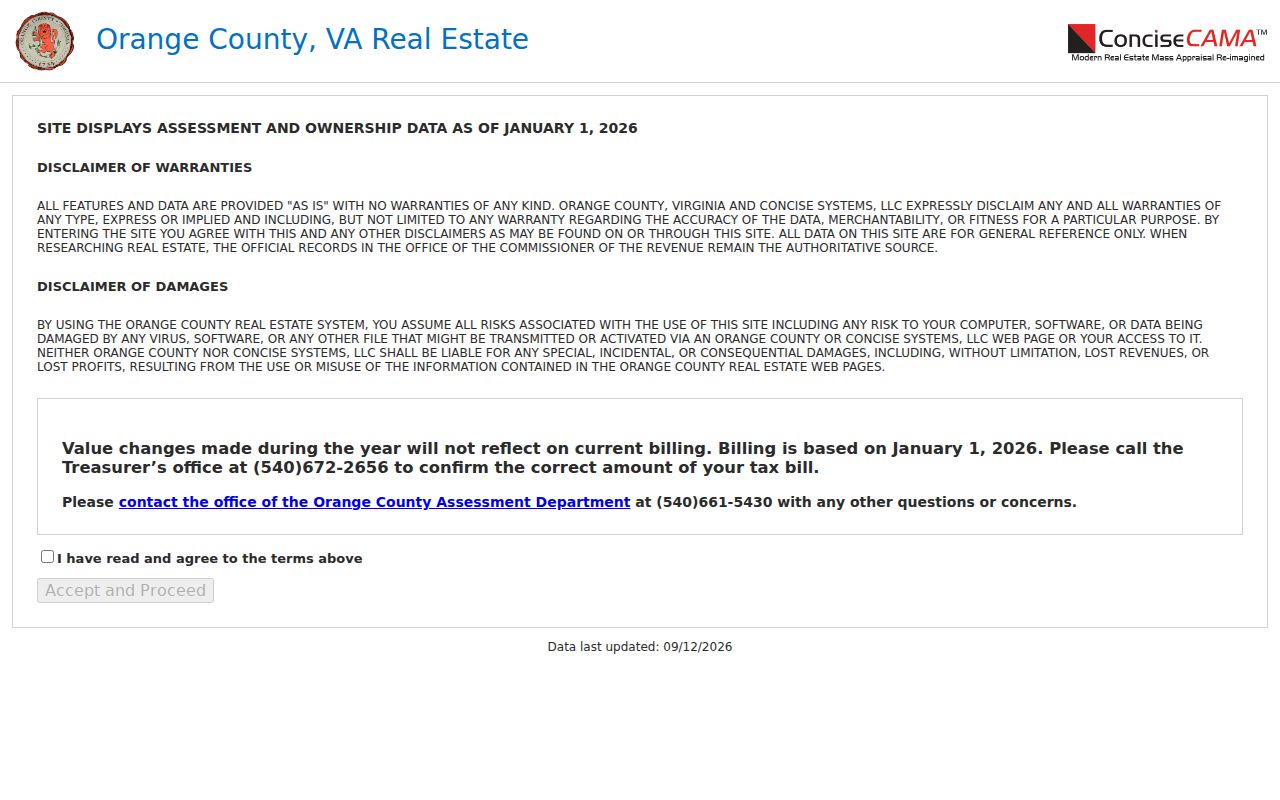
Assessment pairs the owner and parcel; the deed confirms.
Limits of an Orange County Owner Lookup
An owner lookup reports what the public record says. It cannot say who stands on the land or who profits privately from an entity. It does not guarantee title. It may not surface every unrecorded claim, and it cannot settle a boundary. Virginia's Address Confidentiality Program can substitute addresses for protected participants. Some records carry their own privacy limits. A missing residential address is not a data error, and protections should never be bypassed.
Lawful use. Orange County ownership records support property research, civic use, and due diligence. Do not use names or addresses to stalk, threaten, or harass anyone.
Ownership records and voter registration are separate systems in Virginia. The Citizen Portal lets a registered voter check status and polling place. It also shows district, absentee status, and voting history. It is not a property-owner lookup. Full voter-file access is a separate request under election law. The Virginia Citizen Portal describes the registrant lookup.
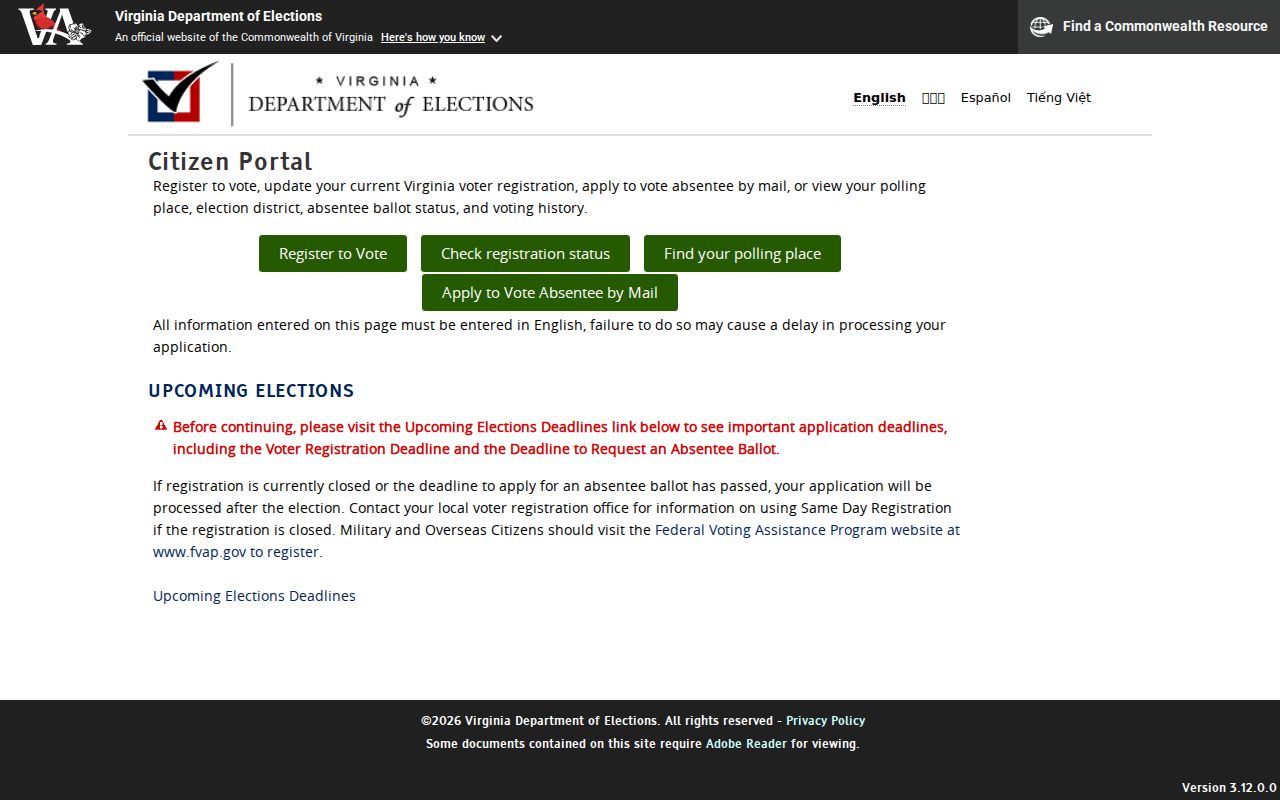
That state tool covers a voter's own registration. For a property's owner of record in Orange County, use the assessment and deed sources.
Request Missing Orange County Owner Records
Sometimes the public portal lacks a needed item. Identify the custodian and request the existing record. Assessment holds the parcel card, the Circuit Court Clerk holds deeds and probate files, the Treasurer holds bills, and Development Services holds permit and code material. Include the address, TaxMap/PIN/PRN, record type, and date range. Virginia FOIA demands reasonable specificity. A written response generally comes within five working days. It never forces an office to create a new record.
Public-record channels help when a search result is incomplete or a historic file sits offline. State whether inspection or a copy is needed. Confirm copy charges with the custodian, since land-record copies and other agency records follow different procedures.
Confirm an Orange County Owner by Record
A public search sometimes returns only a name or a partial reference. Then move to the record room. The Orange Circuit Court Clerk holds the deed and probate trail. Assessment handles the account card. The Treasurer handles bills and payment. Development Services holds county permit records. A request with the site address, parcel number, party name, and date range gives staff a narrower target.
FOIA responses generally come within five working days. Charges are limited to actual costs. The law never requires the county to create a new owner list. Use COVERS/SRA for remote land-record entry where offered, then ask the Clerk about missing images or older books. For an entity, SCC CIS adds business context; for an estate, ask the Clerk about the will or order tied to the parcel.